

 Facebook
 X
X
 Pinterest
 Copy Link
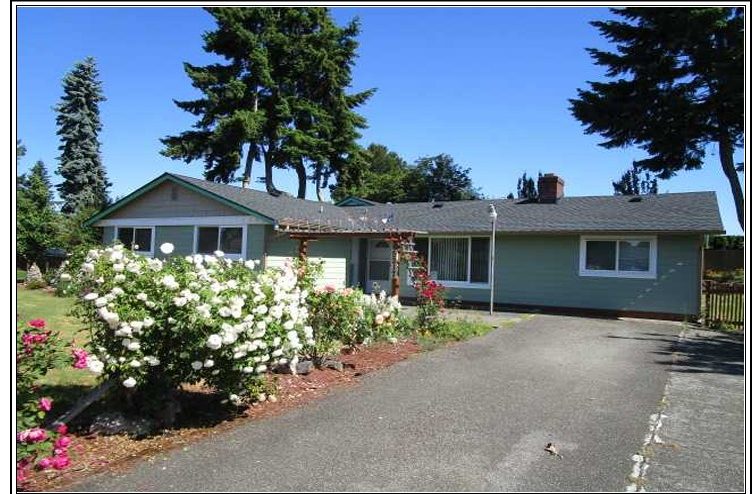
The home behind this case study. What looked like work also contained an opportunity worth investigating.
Brave Buyers Don’t Have to Be Fearless
Buying a house can feel frightening for a very understandable reason:
You are being asked to make an enormous financial decision before you know everything about the property.
What is behind the walls?
Will the lender approve the loan?
Will the appraisal support the price?
What will the inspection reveal?
Can insurance be obtained at a reasonable cost?
What happens if something important changes between offer and closing?
A buyer can look at all those unknowns and conclude that confidence means somehow becoming comfortable with every one of them before making an offer.
It doesn’t.
We don’t have to answer every unknown before we make an offer.
We do need to understand which unknowns matter.
A brave buyer does not have to become fearless.
A brave buyer needs to understand the difference between a known risk and an unknown risk—and what the purchase contract may allow them to investigate before becoming fully committed.
That is where buyer contingencies can become incredibly valuable.
A Contingency Is Not a Prediction That Something Will Go Wrong
A contingency is a condition in the purchase agreement.
Depending on the contract, that condition must be satisfied, waived or otherwise resolved within certain deadlines.
The protections created by buyer contingencies depend on the contract, the forms being used and the transaction itself.
Conceptually, they can help buyers investigate questions that cannot always be answered before an offer is made.
But not every contingency belongs in every offer.
If a buyer understands a particular risk and can responsibly accept it, the offer may be structured differently.
For example:
What condition is the property actually in?
An inspection contingency may give a buyer an opportunity to investigate the property and respond according to the rights provided in the contract.
Will the lender finance the purchase?
A financing contingency may provide protections tied to the buyer’s ability to obtain the financing contemplated by the agreement.
Does the property support the value required for the loan?
Appraisal provisions may become important when the appraised value does not support the agreed purchase price. Exactly what happens next depends on the financing and the contract.
Other buyer contingencies or conditions may be appropriate depending on the property, financing and transaction.
The goal is not to memorize a list of possible escape hatches.
The better question is:
Which unknowns could materially change my decision—and does my contract give me an opportunity to investigate them?
Known Problems and Unknown Problems Are Different
This distinction became particularly important during one of our own home purchases.
By the time we wrote our offer, the property had been on the market for about six weeks.
Nearby comparable homes used in the appraisal had been moving in less than a week.
That did not tell us the house was a bargain.
It told us there was something different about this particular opportunity—and gave us a reason to ask more questions.
We already knew the house needed work.
That mattered.
What we could see during the showing was part of the reason we were willing to make an aggressive offer.
The inspection wasn’t there to turn visible deficiencies into brand-new discoveries after the seller accepted our offer.
We had already considered those things when deciding what we were willing to pay.
The inspection had a much more important job:
Investigate what we couldn’t reasonably know from a showing.
And it did.
It confirmed several concerns we already had while uncovering additional information.
New information arrived.
We used it.
The seller had already reduced the asking price by about 4% before we made our offer.
We came in roughly 10% below the original asking price.
Before submitting the offer, our agent spoke with the listing agent and gathered more information about the property’s activity.
The seller countered at approximately 6% below the original asking price and also agreed to contribute an amount equal to about 3% of the purchase price toward our closing costs and prepaids.
We accepted the counter.
But accepting the counter did not mean blindly accepting everything about the house.
We still had questions.
We still had due diligence to complete.
The inspection did not tell us the house was falling apart.
In fact, the inspector found no major defects in the accessible structural components and considered the roof to be in good condition.
But the inspection also identified safety items, electrical and crawlspace concerns, plumbing repairs and an incomplete furnace installation.
That was exactly the kind of new information we had preserved an opportunity to investigate.
Based on what we learned, we negotiated again.
That later negotiation reduced the purchase price by another roughly 0.5%.
That sequence matters.
Our original offer reflected what we already knew.
Our later negotiation reflected material information we learned afterward.
Those are different conversations.
And that distinction has become an important part of how I think about buyer representation today.
Sometimes the Investigation Ends With “No”
Before buying that house, I paid for inspections on homes I ultimately did not purchase.
At the time, it felt terrible.
Inspections aren’t free.
Neither are appraisals.
Neither is the time spent making offers, gathering documents, talking to lenders and imagining your life in a particular house.
Walking away can feel like losing all of that money and effort.
But there is another way to look at it:
Sometimes you paid for information.
And the information worked.
If an inspection reveals a problem that exceeds what you are willing or financially prepared to accept, the inspection did not fail because you didn’t buy the house.
It performed the job you hired it to perform.
An inspection cannot expose every hidden condition or guarantee that a home will never surprise you. Its value is in giving you more information with which to make the decision.
That is an important shift in thinking.
A successful real estate transaction does not always end at the closing table.
Sometimes a successful transaction is the one you don’t close.
Walking Away and Breaking a Contract Are Not the Same Thing
This distinction matters.
An offer and a mutually accepted purchase and sale agreement are not the same thing.
Once the parties have reached mutual acceptance, the contract matters.
The buyer contingencies matter.
The deadlines matter.
The buyer’s actions matter.
A properly exercised contractual right is different from simply deciding not to perform under a binding agreement.
That is one reason I want buyers to understand their protections before signing, rather than trying to discover their options after something has already gone wrong.
We build in the protections that fit the buyer and the transaction.
Then we pay attention to the deadlines, investigate what we don’t know, and use the options the contract gives us when new information arrives. Washington REALTORS’ guidance likewise emphasizes that inspection-contingency rights depend on timely action under the terms of the agreement.
That feels very different from believing that writing an offer means there is no turning back.
Your real estate broker can help you understand transaction documents and timelines within the scope of their role. Legal questions about contractual rights or consequences should be directed to a qualified attorney.
Buyer Contingencies Can Build Confidence
Competitive markets can create enormous pressure to make an offer more attractive to a seller.
Sometimes buyers consider reducing or waiving protections to compete.
For some buyers, accepting additional risk may be a calculated decision.
But “competitive” and “appropriate for you” are not automatically the same thing.
A buyer with substantial cash reserves, construction experience and a high tolerance for unexpected repairs may evaluate a particular risk very differently from a buyer who needs nearly every available dollar to complete the purchase.
Neither buyer is inherently braver.
They simply have different capacities for absorbing risk.
So instead of automatically asking:
How many protections can I remove so the seller chooses me?
I would rather start with:
Which unknowns could change my decision?
Which risks can I responsibly absorb?
Which risks do I need an opportunity to investigate first?
Those answers may produce very different offers for different buyers.
That is a much more useful kind of bravery.
A Contingency Is Not a Wish List
There is another side to this conversation.
Due diligence can uncover information that genuinely changes a transaction.
A sewer scope may reveal a major failure.
An inspection may uncover an electrical problem that was not visible during the showing.
An inspection does not eliminate the unknown.
It gives the buyer more information with which to decide whether the unknowns that remain represent an acceptable level of risk.
The roof, foundation, plumbing or another major component may turn out to be substantially different from what the buyer reasonably understood before making the offer.
New information can create a legitimate reason to have a new conversation.
But that is different from seeing worn carpet, an outdated kitchen or obvious deferred maintenance before making an offer and then treating those same visible conditions as new discoveries after mutual acceptance.
Due diligence should help us investigate the unknown. It should not automatically become a second opportunity to rewrite everything we already knew.
That does not mean buyers should never request repairs, credits or other changes.
It means the request should have a reason.
What changed?
What did we learn?
How significant is it?
Does it materially affect the buyer’s willingness or ability to complete the purchase?
Those are questions worth asking.
A Strong Offer Starts With the Problem We Are Trying to Solve
The same thinking applies when a buyer needs help preserving cash.
Before asking a seller to solve every dollar of a problem, I want to understand the whole transaction.
Could a seller contribution help?
Is there a lender credit or financing structure worth discussing?
Does the buyer qualify for an assistance program?
Would another combination of price and allowable concessions better accomplish the buyer’s goal?
Different loan programs have different requirements and limits, so the lender needs to be part of those conversations.
The point is not to avoid asking the seller for something the buyer legitimately needs.
The point is to understand why we are asking for it.
A strong offer is not a collection of everything we hope the seller might give us.
It is a strategy built around the buyer’s priorities, the property’s risks and the realities of the transaction.
Brave Enough to Find Out
Buyer contingencies cannot eliminate every risk involved in purchasing real estate.
Nothing can.
A perfect inspection does not exist.
Markets change.
Houses surprise us.
Financing changes.
Life changes.
But good decision-making does not require perfect certainty.
It requires enough information to determine whether the remaining uncertainty is something you are willing and capable of carrying.
Sometimes the answer will be yes.
Sometimes it will be no.
Use new information when it arrives.
Changing your decision because the facts changed is not indecisiveness.
It is decision-making.
And sometimes the bravest thing a buyer can say is:
No. This one isn’t mine.
Because that leaves you free to keep looking until you find the one where the numbers, the risks, the opportunity and your own capabilities finally line up.
And when the information keeps pointing toward yes?
Being brave doesn’t mean pretending there is no risk.
It means understanding enough of the risk to make the next decision anyway.
That is when bravery stops meaning:
“I’m not afraid.”
It starts meaning:
I’m brave enough to find out.
Sarah Meyerdirk is a licensed real estate broker affiliated with Better Homes and Gardens Real Estate NW Home Team. This article is educational in nature and is not legal, lending, tax or financial advice. Contractual rights and contingency provisions vary by transaction and should be reviewed with the appropriate licensed professionals.


